

Microscope price in India is not a fixed number. It shifts with optics, objectives, head type, illumination, camera integration and the application the instrument is built for. A basic school microscope and an advanced research-grade instrument may share the same product category on paper, but they cannot be judged on the same price scale. This becomes especially relevant for laboratories, hospitals, medical colleges, universities, research institutes, biotechnology labs, distributors and industrial buyers, all of whom search for a laboratory microscope with very different requirements in mind. Before you finalize a purchase, it helps to understand what actually drives microscope prices in India rather than comparing units on magnification numbers or the lowest quoted figure alone. A microscope manufacturer in India typically offers several configurations of the same base model, and the difference between them can run into thousands of rupees depending on the optical system, mechanical build and imaging capability included. Explore 200+ Precision Microscopes for Education, Medical, Research & Industrial Applications : MICROSCOPES
Microscope Price in India – Quick Overview
There is no single, universal price point for a microscope in India because the instrument itself is not a single product category. A stereo microscope built for PCB inspection has a completely different optical and mechanical design from a fluorescence microscope built for biological research, even though both are described as “microscopes” in casual conversation. Every application calls for a different optical configuration. A pathology lab needs consistent binocular viewing for long shifts. A biotechnology lab working with live cultures needs an inverted microscope that can view specimens from below. A quality-control department inspecting metal surfaces needs reflected illumination rather than the transmitted light used in biology. Each of these requirements changes the final price. For institutional buyers, the picture gets more layered still. Pricing for colleges, hospitals and research institutes is frequently linked to quantity, configuration and any customization requested, which is why two departments in the same college may end up with very different quotations for what looks like the “same” microscope on a brochure.
| Microscope Type | Common Application | Typical Buyer | Price Position |
|---|---|---|---|
| Student Microscope | Education | Schools/Colleges | Entry |
| Compound Microscope | Biology/Microbiology | Labs/Colleges | Entry–Mid |
| Binocular Microscope | Routine Laboratory Work | Hospitals/Labs | Mid |
| Trinocular Microscope | Research/Imaging | Universities/R&D | Mid–Premium |
| Stereo Microscope | Inspection/Dissection | Industry/Education | Mid |
| Inverted Microscope | Cell/Tissue Culture | Biotech/R&D | Premium |
| Fluorescence Microscope | Advanced Research | Universities/R&D | Premium |
| Metallurgical Microscope | Material Inspection | Industry/QC | Mid–Premium |
| Multi-Head Microscope | Medical Teaching | Medical Colleges | Premium |
Exact rupee ranges depend on current configuration and can be shared against a specific requirement.
What Factors Affect Microscope Price in India?
Optical System and Lens Quality
Optical correction is where price differences start. Achromatic optics are correct for basic colour distortion and are common in entry-level instruments. Plan achromatic optics go further, correcting field curvature so the entire viewing field stays sharp rather than only the centre. Infinity-corrected optical systems, common in research and trinocular setups, allow accessories to be added into the light path without degrading image quality. Field flatness and overall image clarity both track closely with how much correction has gone into the objective design.
Objective Lens Configuration
Most laboratory microscopes ship with a set of objectives covering 4X, 10X, 20X and 40X, with 100X oil immersion added for microbiology work that needs to resolve bacteria and fine cellular detail. Numerical aperture, which determines how much light an object can gather and how fine a detail it can resolve, has a direct bearing on cost. Higher NA objectives with better correction cost more to manufacture and this is reflected in the final price.
Monocular, Binocular or Trinocular Head
A monocular head is the simplest and least expensive configuration, generally suited to teaching. A binocular head, viewed through two eyepieces, reduces eye strain during long observation sessions and is standard in most working laboratories. A trinocular head adds a third port for a camera, enabling image capture and documentation, which raises the price over a binocular unit of similar optical grade.
Illumination System
LED illumination has largely replaced halogen bulbs in newer instruments because it runs cooler, lasts longer and gives more consistent colour rendering, though it does add to the base cost. Köhler illumination, which evenly distributes light across the field, is a feature of higher-end compound and research microscopes. Reflected illumination, used in metallurgical work, and fluorescence illumination, which needs specific excitation sources and filters, are both premium additions.
Mechanical Stage and Focusing Precision
Coaxial focusing knobs, fine-focus adjustment and smooth mechanical stage movement all affect how usable an instrument is during long sessions, and better mechanical builds cost more to produce. A microscope with a loose or imprecise stage can undo the benefit of good optics simply because the specimen cannot be positioned accurately.
Microscope Camera and Digital Imaging
Camera compatibility has become one of the bigger price variables in recent years. Resolution, sensor quality, bundled software and display options (from a simple monitor connection to full measurement and reporting software) can shift the price of an otherwise identical optical setup considerably. Digital documentation is now a standard requirement in pathology, research and teaching environments.
Specialized Observation Techniques
Phase contrast, fluorescence, polarization and dark field are all specialized techniques that require additional optical components beyond the standard bright-field setup. Reflected-light microscopy, used for opaque specimens such as metals, needs its own illumination path entirely. Each of these adds meaningfully to the instrument’s price because they require purpose-built optics rather than accessories bolted onto a basic frame.
Accessories, Software and Upgrade Options
Comparing the microscope price in India only by magnification can be misleading because optical quality, mechanical precision and imaging capability may differ significantly between models.
Main Microscope Types and Their Prices in India
1. Compound Microscope
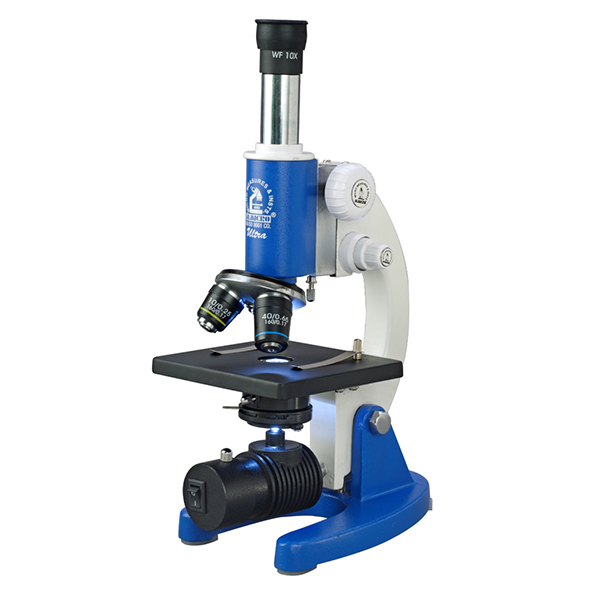
Compound Microscope
A compound microscope uses two or more lenses to magnify a specimen and is the standard instrument for biology, microbiology, pathology and educational use. Most compound microscopes are supplied with 4X, 10X, 40X and 100X objectives, making them suitable for both teaching institutions and diagnostic labs running routine slide examination.
Compound Microscope Price in India
Price depends primarily on the optical correction of the objectives, the illumination type (LED versus halogen) and whether the head is monocular, binocular or trinocular. A basic teaching unit sits at the lower end, while a binocular unit with better optics for a diagnostic lab costs more.
Explore OUR Compound Microscopes
2. Binocular Microscope
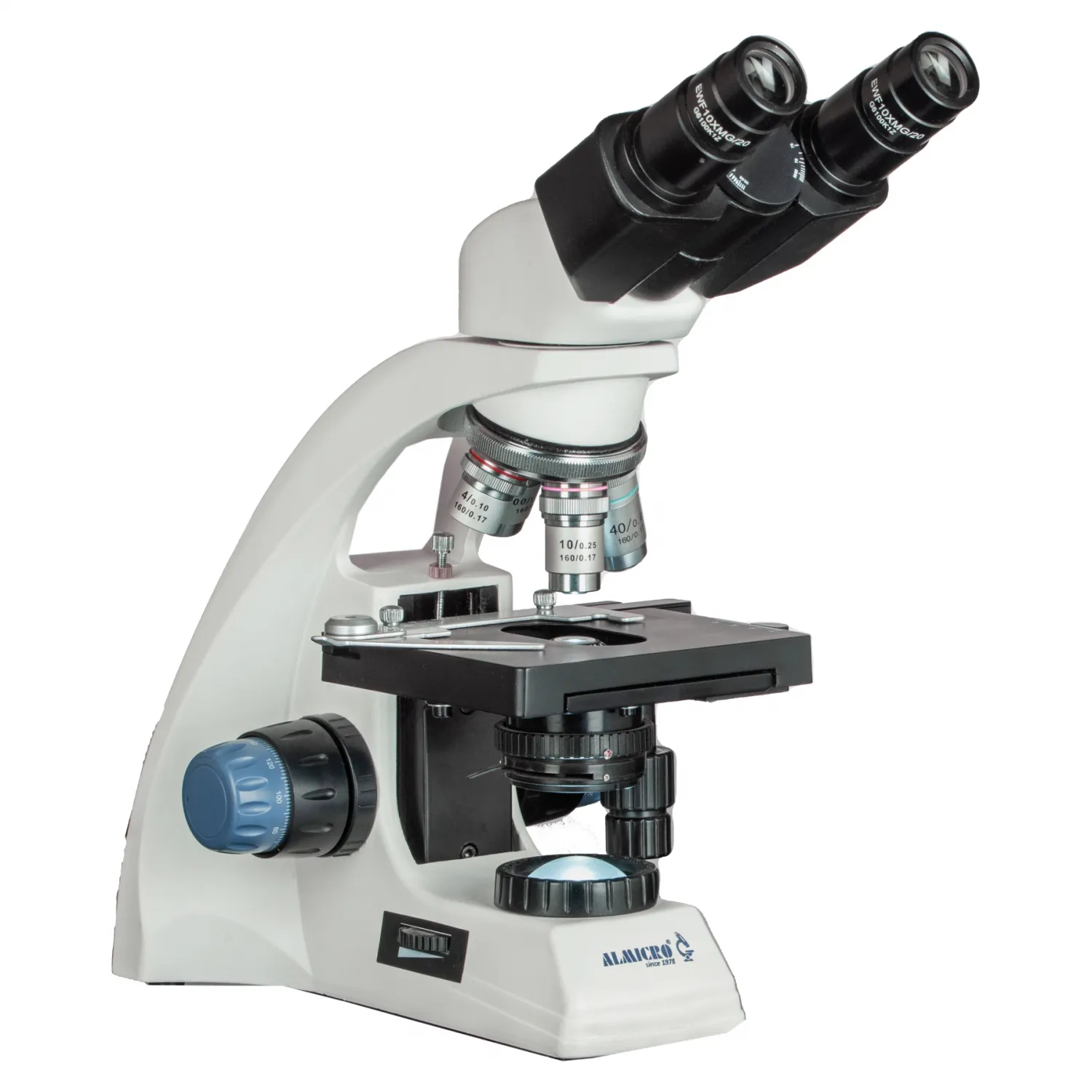
Binocular Microscope
The two-eyepiece configuration of a binocular microscope allows for comfortable, long-duration observation, which is why it is the standard choice for routine laboratory work in pathology and microbiology departments across medical laboratories.
Binocular Microscope Price in India
Pricing moves up with better optical correction, LED illumination and mechanical stage quality. Hospitals and diagnostic labs processing high sample volumes typically prioritize durability and eye comfort over additional imaging features.
View OUR Binocular & Medical Microscopes
3. Trinocular Microscope
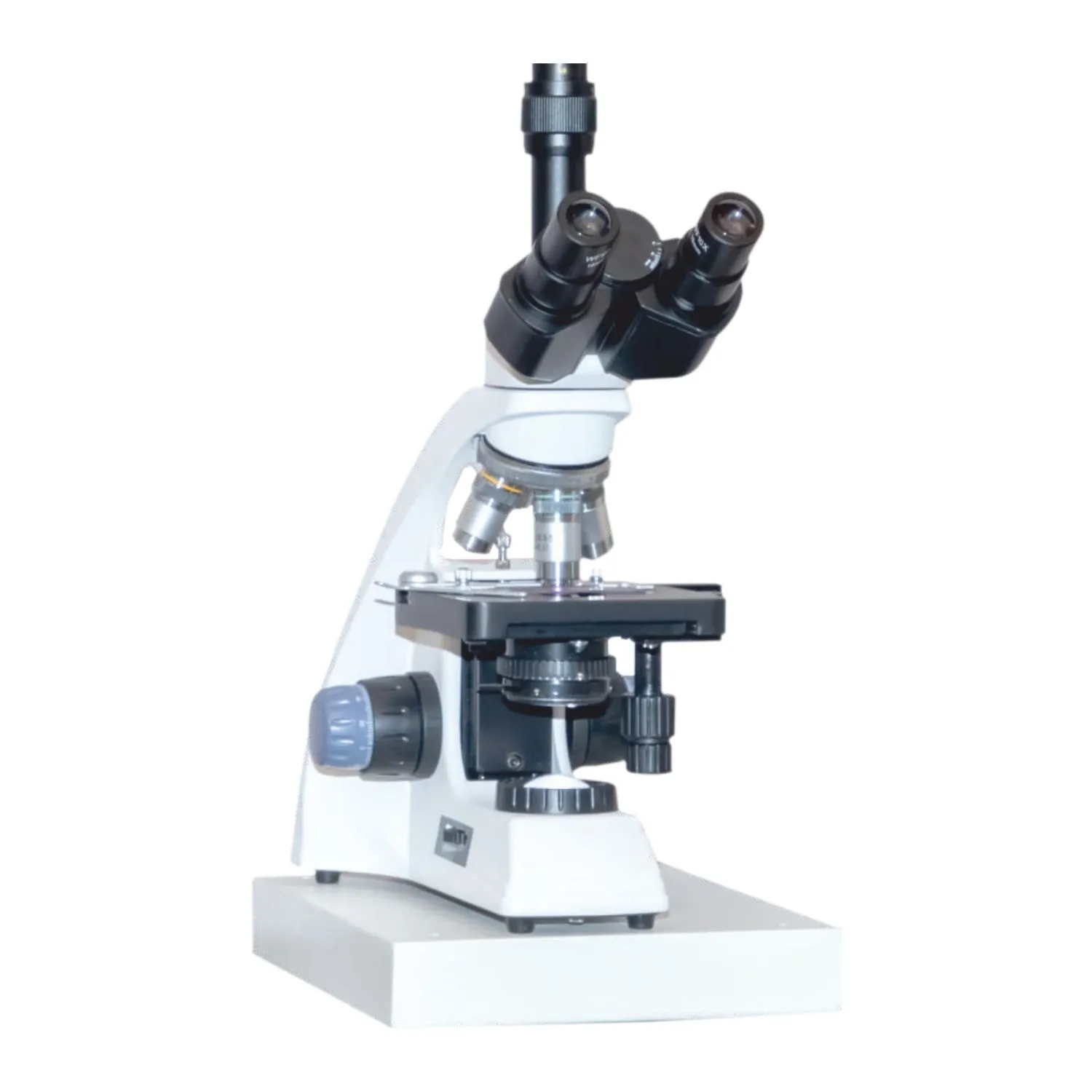
Trinocular Microscope
A trinocular microscope adds a third imaging port to the standard binocular design, enabling microscope camera compatibility for image and video documentation. This makes it a preferred choice for research, pathology reporting and teaching applications where findings need to be recorded or shared.
Trinocular Microscope Price in India
The price is shaped by the optical system, objective quality, illumination and, significantly, the camera and imaging software bundled with it. A trinocular unit with a high-resolution camera and measurement software will cost noticeably more than one with a basic camera port.
Explore OUR Trinocular Microscopes
4. Research Microscope
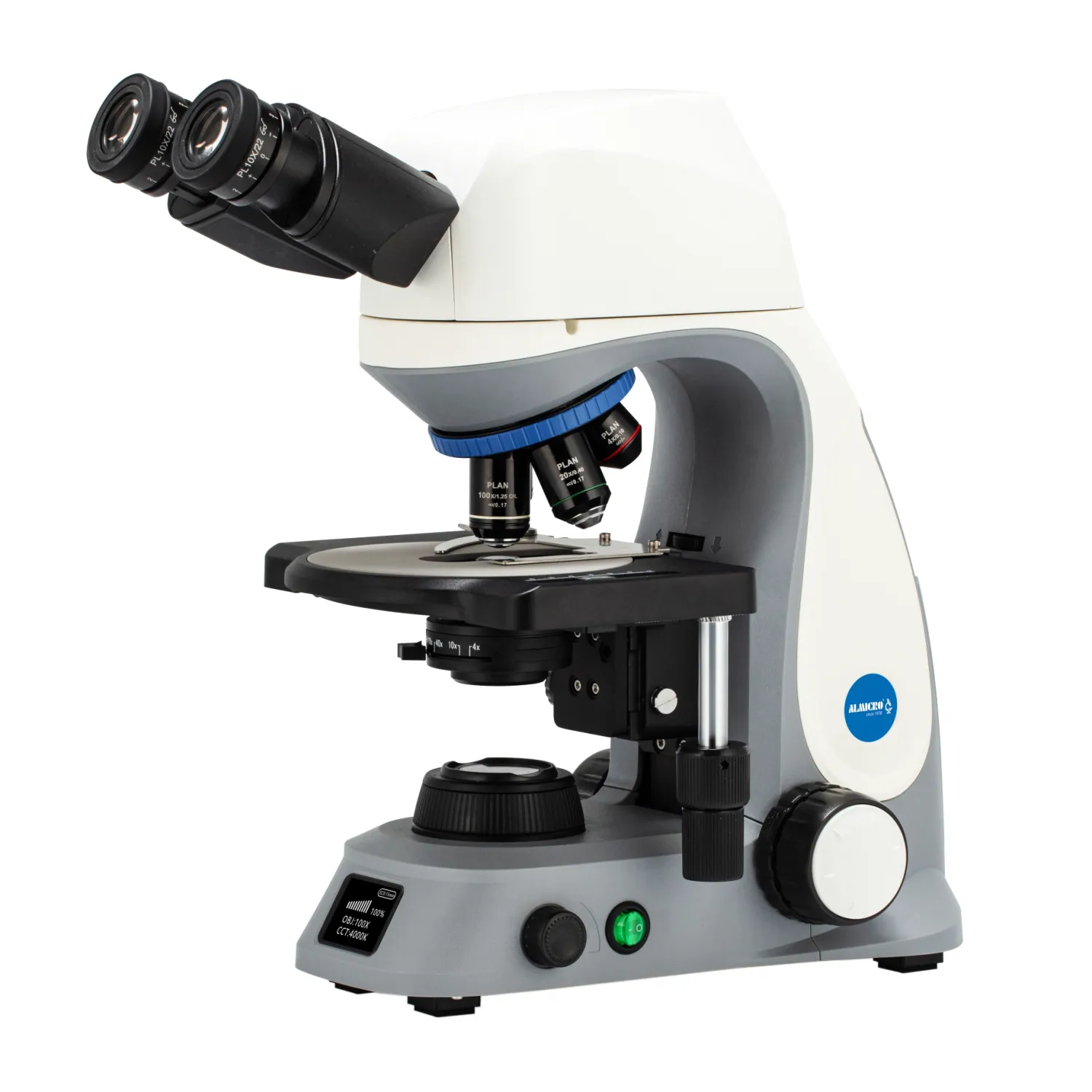
Research Microscope
Research microscopes are built around plan objectives, infinity-corrected optical systems and Köhler illumination, giving universities and R&D laboratories the image quality needed for advanced observation and documentation work.
Research Microscope Price in India
Because research microscopes combine premium optics with advanced imaging, price sits at the higher end of the laboratory microscope range. Configuration for specific research applications (fluorescence add-ons, phase contrast modules) pushes price further.
5. Stereo Microscope
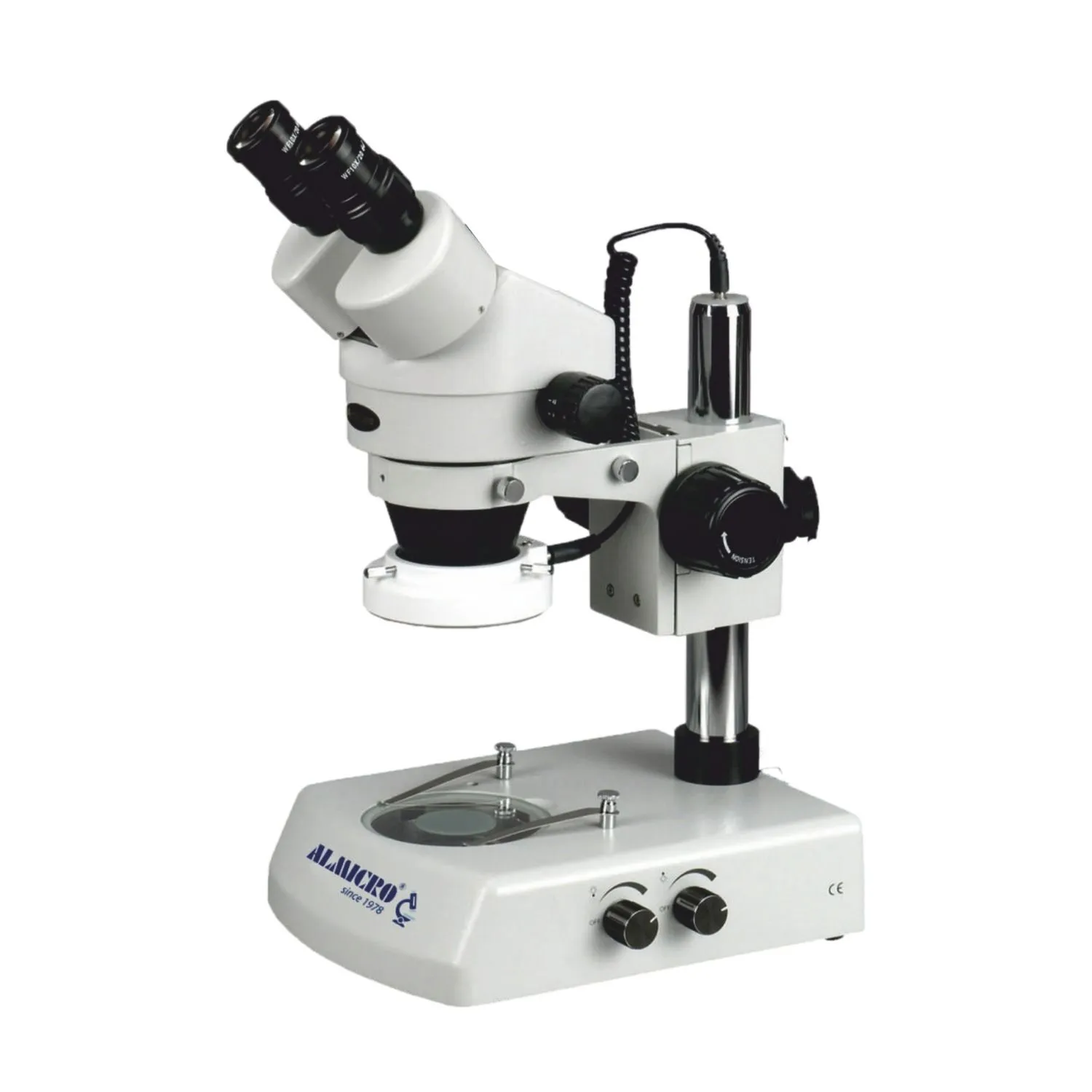
Stereo Microscope
A stereo microscope provides three-dimensional observation with a large working distance and lower magnification range, making it the standard tool for PCB inspection, electronics assembly, gemology, dissection work and general industrial inspection.
Stereo Microscope Price in India
Price is influenced by zoom range, illumination type and stand design (post stand versus boom stand for larger industrial parts). Units built for fine electronics inspection cost more than basic dissection-grade stereo microscopes.
Explore OUR Stereo Microscopes
6. Inverted Microscope
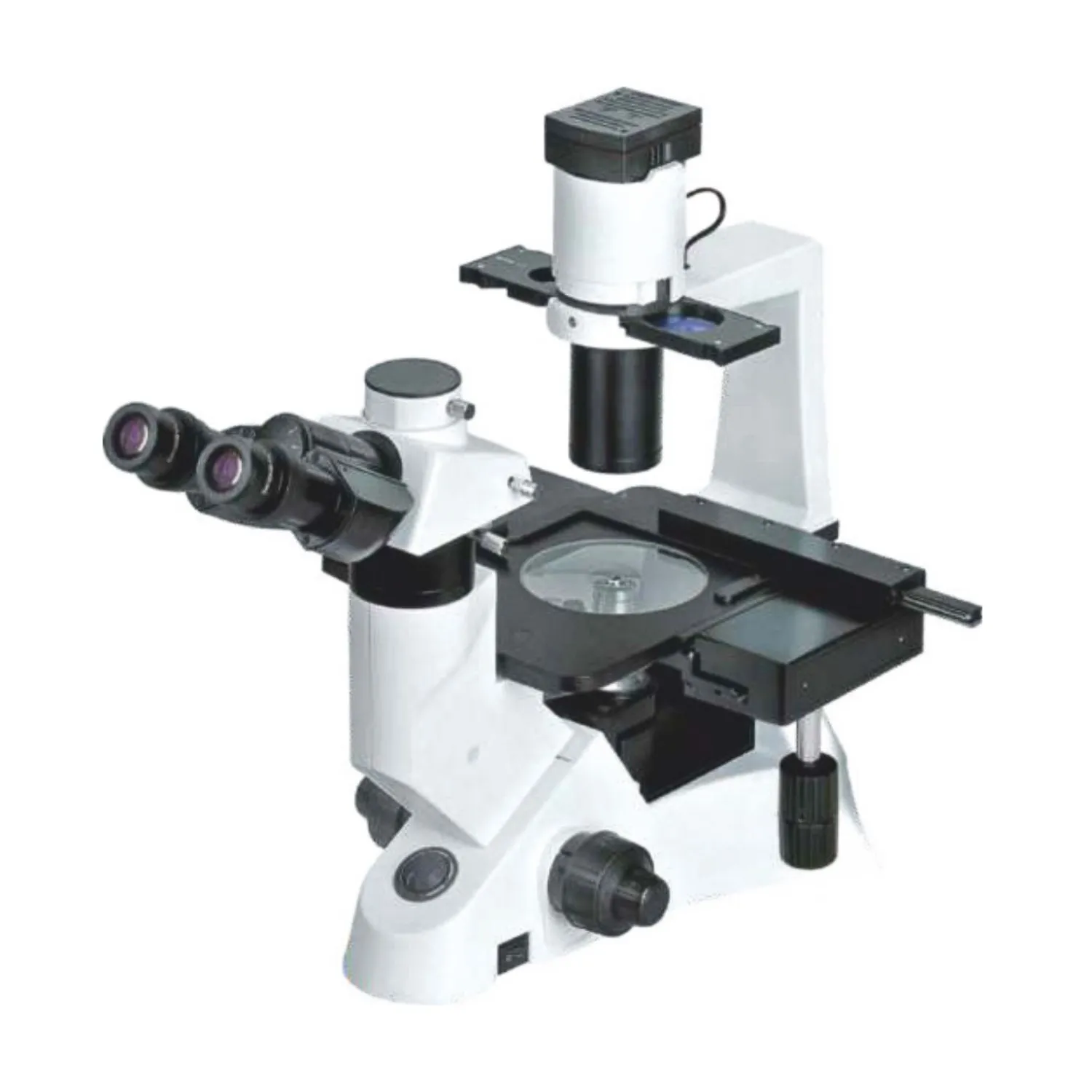
Inverted Microscope
An inverted microscope positions its objectives below the specimen stage rather than above it, which allows direct observation of live cells and tissue in petri dishes and culture vessels without disturbing the sample. This makes it the standard instrument for cell culture, tissue culture and live-cell observation work.
Inverted Microscope Price in India
Inverted microscopes sit in the premium price bracket because of their specialized optical path and mechanical design. Adding phase contrast for better contrast on unstained live cells increases the price further.
7. Fluorescence Microscope
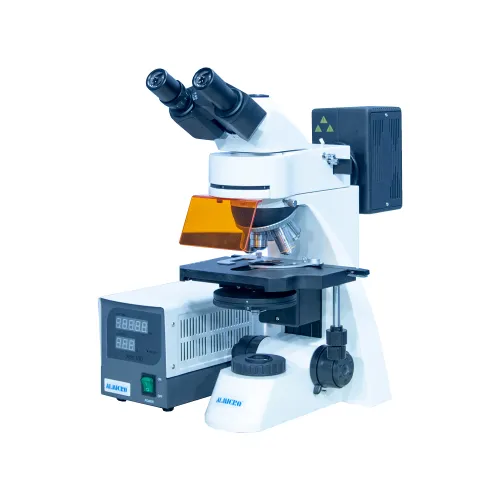
Fluorescence Microscope
Fluorescence microscopes are designed to observe fluorescently labelled specimens using specific excitation light sources and filter systems, making them essential for biological research, biotechnology and advanced imaging applications where standard bright-field illumination is not sufficient.
Fluorescence Microscope Price in India
This is one of the more expensive microscope categories because of the excitation source, filter cubes and camera requirements involved. The number of fluorescence channels and camera sensitivity are the biggest price drivers.
Explore OUR Fluorescence Microscope
8. Metallurgical Microscope
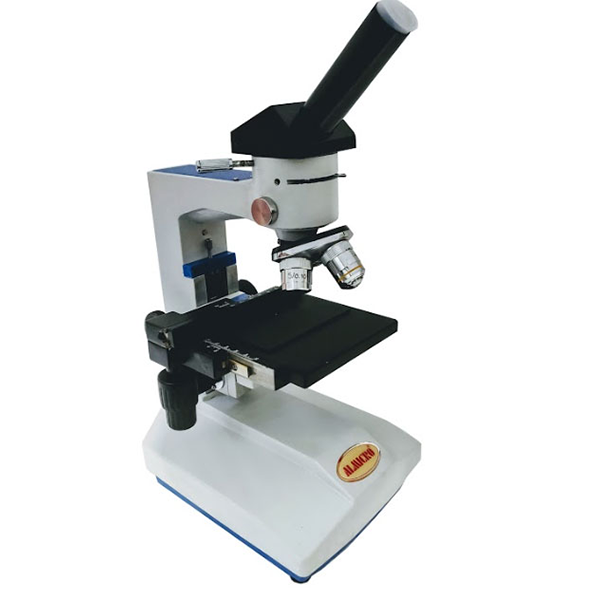
Metallurgical Microscope
Metallurgical microscopes use reflected illumination to examine opaque samples such as metal surfaces, grain structures and coatings, making them a standard tool in material science, manufacturing and quality-control settings.
Metallurgical Microscope Price in India
Price depends on the reflected-light illumination system and objective correction designed for opaque surface inspection, along with any polarization or dark-field attachments needed for detailed grain analysis.
View OUR Metallurgical Microscopes
9. Multi-Head / Penta Head Microscope
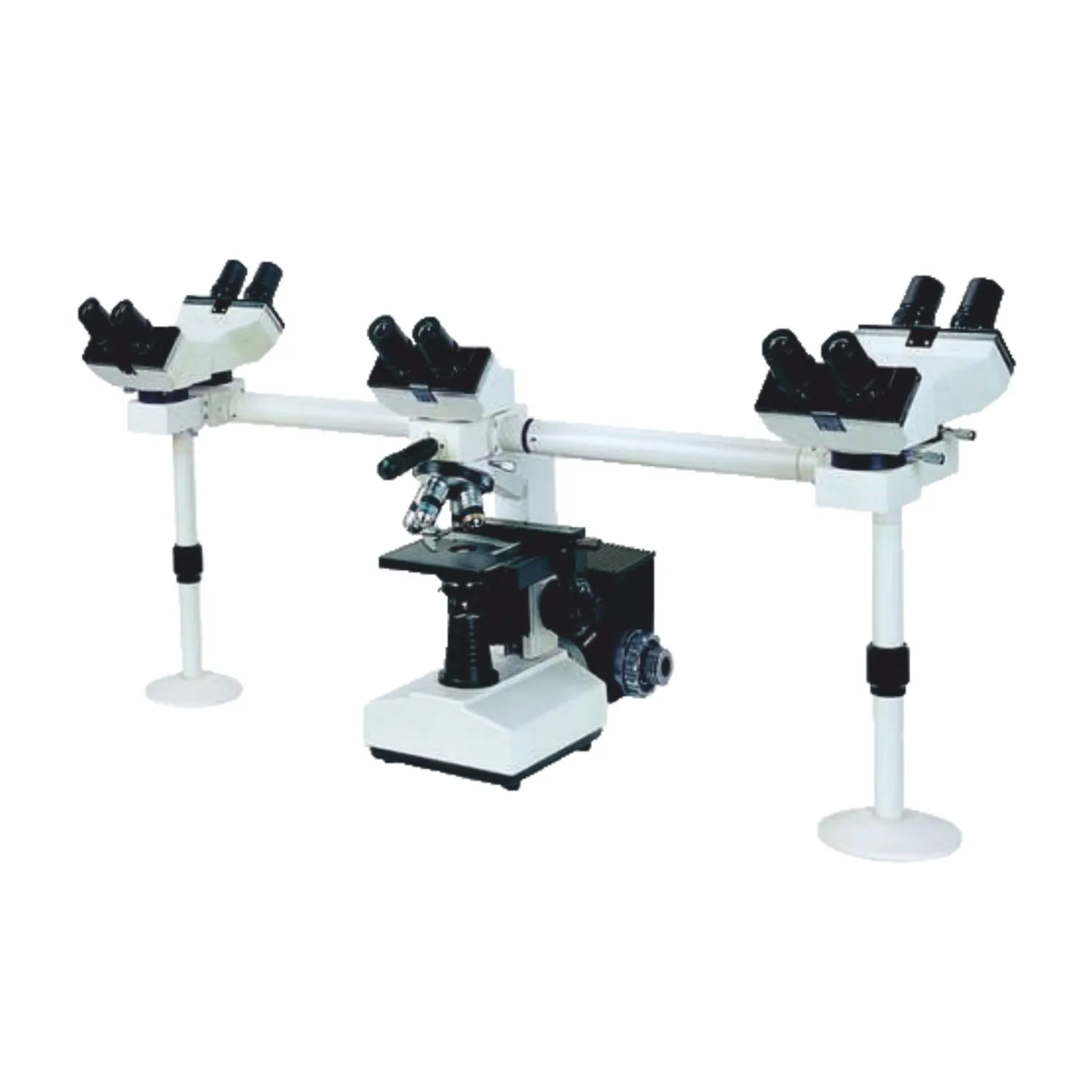
Multi-Head / Penta Head Microscope
A multi-head microscope allows multiple observers to view the same specimen at the same time through a shared optical bridge, which makes it central to medical education, pathology training and collaborative observation in teaching hospitals and medical colleges.
Multi-Head Microscope Price in India
Because it needs a shared optical bridge feeding several viewing heads without losing image quality at any station, this is one of the higher-priced categories, scaling further with the number of heads required.
Explore Multi-Head Microscopes
10. Digital Microscope / Microscope with Camera
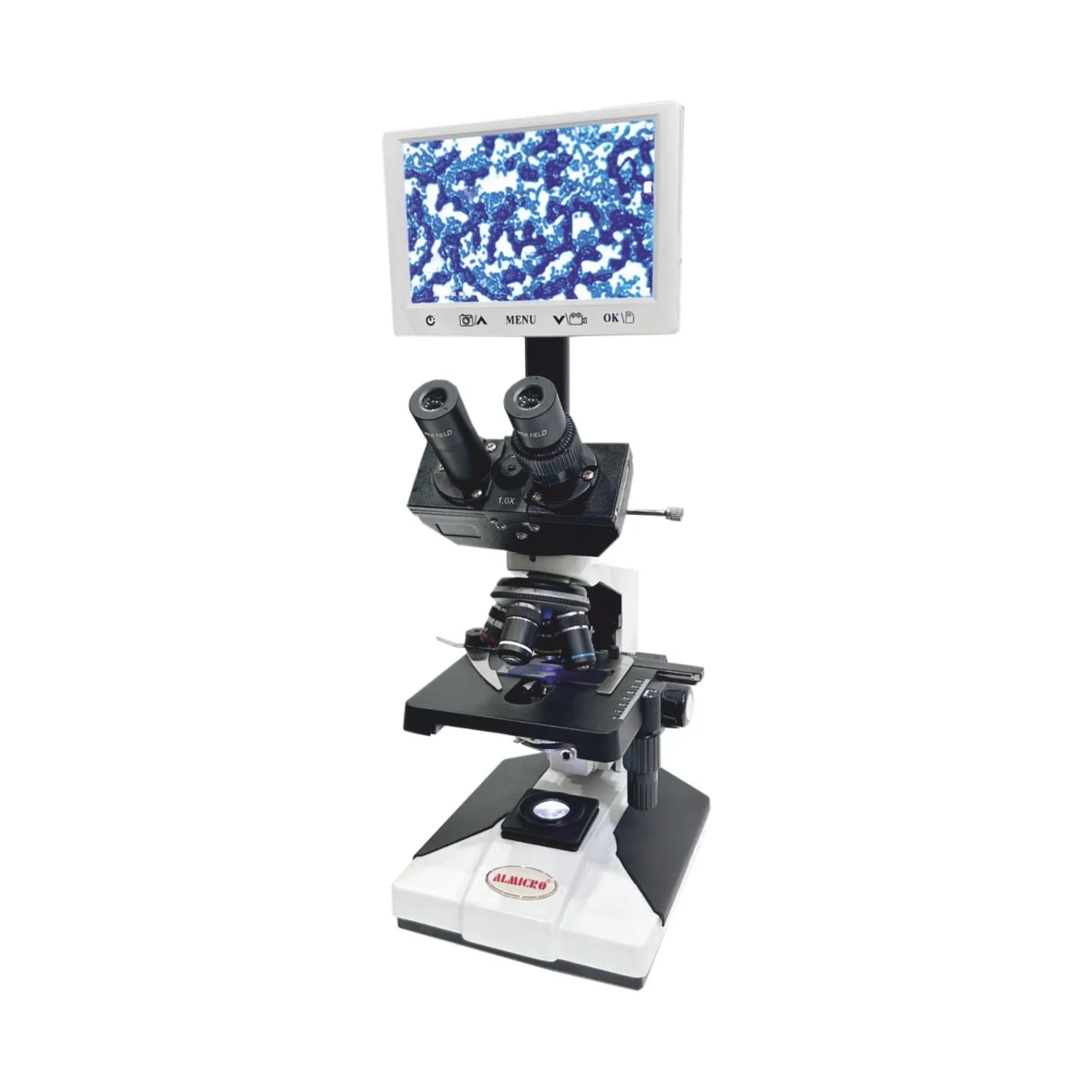
Digital Microscope / Microscope with Camera
A digital microscope integrates live display, image capture and measurement capability directly into the observation workflow, supporting research documentation, teaching demonstrations and laboratory reporting without a separate camera setup.
Digital Microscope Price in India
Camera resolution, live display quality and bundled measurement software are the main price variables here, alongside the base optical system it is paired with.
Explore Microscope Cameras & Digital Imaging
Which Microscope Should You Buy?
The right microscope depends on the specimen, application and workflow, not simply the highest magnification available.
Microscope for Schools & Colleges
A student microscope or entry-level compound microscope covers routine teaching needs. Durability and simplicity matter more here than advanced imaging, since these instruments see frequent handling by students.
Microscope for Medical Colleges
A trinocular or multi-head microscope supports simultaneous observation during teaching sessions, letting an instructor and multiple students view the same slide at once, which is central to pathology and histology training.
Microscope for Pathology Laboratories
A binocular or trinocular microscope with strong optical clarity and camera documentation supports the routine observation and reporting workload of a pathology department.
Microscope for Microbiology Laboratories
A compound microscope with a reliable 100X oil immersion objective is the standard requirement here, since resolving bacteria and fine cellular structures depends heavily on that objective’s quality.
Microscope for Research Laboratories
A research-grade trinocular microscope, built around advanced optics and imaging, gives universities and R&D teams the configuration flexibility they need for varied experimental work.
Microscope for Cell & Tissue Culture
An inverted microscope is the standard choice, since it allows observation of live cultures in petri dishes and flasks from below without disturbing the sample.
Microscope for Biotechnology Research
Depending on the specific application, an inverted microscope, fluorescence microscope or research microscope may be the right fit, often in combination for labs running multiple experiment types.
Microscope for Industrial Quality Control
A stereo microscope for general inspection or a metallurgical microscope for surface and grain analysis are the standard tools for manufacturing quality-control departments.
Microscope Price by Application
| Application | Suitable Microscope | Important Feature |
|---|---|---|
| Biology Teaching | Compound | Easy Operation |
| Pathology | Binocular/Trinocular | Optical Clarity |
| Microbiology | Compound | 100X Oil Immersion |
| Medical Teaching | Multi-Head | Simultaneous Viewing |
| Research | Research Trinocular | Advanced Optics |
| Cell Culture | Inverted | Culture Vessel Access |
| Biotechnology | Inverted/Fluorescence | Specialized Imaging |
| Industrial QC | Stereo/Metallurgical | Surface Inspection |
How to Compare Microscope Prices Before Buying
Compare Complete Optical Specifications
Magnification alone tells you very little. Two microscopes listed at “1000X” can perform very differently depending on objective correction and numerical aperture.
Check Objective Quality
Look at optical correction (achromatic versus plan achromatic), numerical aperture and the full objective set included, not just the headline magnification figure.
Evaluate Mechanical Construction
Stage precision, smoothness of focus movement, overall stability and build durability determine how usable the microscope will be over years of daily operation.
Check Camera Compatibility
For research, pathology, teaching and documentation needs, confirm the trinocular port specifications and whether a camera is bundled or needs to be sourced separately.
Look at Upgrade Possibilities
Ask whether the base system can later support a camera, phase contrast module, fluorescence attachment or other accessories, so the instrument can grow with your lab’s needs.
Compare Accessories Included
Two units at a similar base price may include very different accessory sets. Confirm exactly what ships in the box before comparing final numbers.
Ask About Spare Parts
For institutional buyers running instruments over many years, easy access to spare parts (bulbs, objectives, eyepieces) matters as much as the initial price.
Check Service Support
Especially relevant for long-term institutional use, confirm what installation and after-sales service the manufacturer or supplier provides.
Compare Total Configuration, Not Just Base Price
Two microscopes with similar prices and the same stated magnification can perform very differently because objective correction, numerical aperture, illumination uniformity, stage precision and focusing mechanisms may differ.
Buying Microscopes for Colleges, Hospitals & Research Institutions
Institutional buying works differently from a single-unit purchase. Medical colleges, universities, hospitals, research institutes, government laboratories, pharmaceutical laboratories, biotechnology companies and scientific equipment distributors typically need multiple units across several departments, each with its own configuration requirements. A microbiology department may need compound microscopes with 100X oil immersion objectives, while the pathology wing in the same institution needs trinocular units with documentation cameras, and a research wing may separately require inverted or fluorescence setups. Bulk purchases of this kind are usually tied to tender specifications, which means technical documentation, objective and illumination specifications, camera requirements and accessory lists all need to be laid out clearly before quotations can be compared meaningfully. For government and institutional tenders specifically, quantity requirements, detailed quotations, spare parts availability and technical support terms typically carry as much weight in the evaluation as the base price per unit. Buyers issuing tenders benefit from requesting configuration-wise pricing rather than a single blended figure, since departments within the same institution rarely need identical instruments. Installation and service commitments, where applicable, should also be confirmed in writing before an order is finalized, particularly for larger multi-department procurements.
Need the Right Microscope at the Right Price?
Microscope selection depends on your application, specimen type, optical requirements, imaging needs and quantity. Instead of comparing prices alone, share your requirement to receive a suitable microscope configuration and current pricing for your laboratory, institution or research facility.
Call: +91 70822 94902
Email: inq@almicroinstruments.com
Get Microscope Price & Recommendation
How to Choose a Microscope Manufacturer in India
Selecting the right microscope manufacturer in India involves more than comparing quoted prices side by side. Since a microscope’s performance depends so heavily on its optical and mechanical build, the manufacturer behind it matters almost as much as the specific model.
Product Range
Check whether the manufacturer offers microscopes across multiple applications (education, medical, research, industrial) rather than a narrow single-category catalogue, since this usually signals broader optical and manufacturing expertise.
Optical Specifications
Evaluate the optical systems and objective configurations on offer. Manufacturers that publish detailed specifications (correction type, NA values, working distance) are generally easier to compare against your actual requirement.
Manufacturing Capability
Look at what the manufacturer actually produces in-house versus what is assembled or sourced from elsewhere. This affects both consistency and how well the company can support customization requests.
Quality Control
Consistent inspection and testing at the manufacturing stage matters because optical defects are not always visible during a quick demonstration and can only surface after weeks of regular use.
Technical Documentation
Specifications, user manuals and product information should be readily available, both for informed purchasing decisions and for later maintenance and training needs.
Custom Configuration
For research, medical and institutional buyers, the ability to customize objective sets, illumination type or camera integration to a specific application is often a deciding factor.
Institutional Supply Capability
Check whether the manufacturer can realistically handle multi-unit, department-specific orders for larger institutions, including consistent configuration across units purchased at different times.
Spare Parts and Service
Since microscopes are long-term instruments, confirm the ease of sourcing spare parts and the manufacturer’s service response for repairs and calibration.
OEM and Bulk Requirements
For distributors and private-label buyers, confirm the manufacturer’s capacity and terms for OEM production and bulk order fulfilment. When selecting a microscope manufacturer in India, B2B buyers should evaluate technical capability, optical quality, product consistency and support alongside quoted price.
What Should Buyers Check When Comparing the Top Microscope Manufacturers in India?
Buyers searching for the top 10 microscope manufacturer in India are often trying to compare suppliers based on pricing, product range, specifications and credibility rather than looking for a single ranked winner. A comparison of the top 10 microscope manufacturers in India should focus on technical capability and long-term value rather than rankings alone, since a listicle ranking rarely captures which manufacturer actually fits a specific department’s application.
Product Portfolio
How wide a range of microscope types and configurations does the manufacturer actually produce.
Optical Quality
What level of optical correction and objective quality is standard across their range.
Manufacturing Capability
Whether production, assembly and quality testing happen in-house or through third parties.
Technical Specifications
Whether detailed, verifiable specifications are published for each model rather than vague marketing descriptions.
Quality Inspection
What inspection and testing process each unit goes through before dispatch.
Customization Capability
Whether objective sets, illumination and imaging can be configured to a specific application.
Institutional and Bulk Supply
Track record of supplying multiple units to colleges, hospitals and research institutions reliably.
After-Sales Support
Availability of spare parts, service response time and calibration support after purchase.
Manufacturer vs Trader – What Should B2B Buyers Check?
| Factor | Manufacturer | Trader / Reseller |
|---|---|---|
| Configuration Control | Usually Higher | Depends on Source |
| Customization | Often Possible | Usually Limited |
| Technical Knowledge | Often Deeper | Varies |
| Bulk Consistency | Greater Control | Supplier-Dependent |
| Spare Support | More Direct | May Depend on Third Party |
Neither option is automatically the better choice for every buyer. A trader with strong after-sales infrastructure can serve some institutions well, while a manufacturer offers more direct control over configuration and consistency for others. The right fit depends on the buyer’s own service and customization needs.
Explore 200+ Precision Microscopes & Configurations
Buyers can explore 200+ precision microscope models and configurations covering educational, medical, research and industrial applications, spanning routine laboratory microscopy, medical microscopy, research microscopy, digital imaging, cell culture, fluorescence, material inspection and medical teaching setups.
- Compound Microscopes
- Medical & Binocular Microscopes
- Research & Trinocular Microscopes
- Stereo Microscopes
- Inverted Microscopes
- Fluorescence Microscopes
- Metallurgical Microscopes
- Multi-Head Microscopes
- explore OUR 200+ precision microscope models
Questions to Ask Before Requesting a Microscope Price
What sample will be observed?
The specimen type (live cells, stained slides, opaque metal, small electronic components) determines the entire optical approach needed.
What is the intended application?
Teaching, diagnostics, research or industrial inspection each call for a different microscope category.
Which objectives are required?
Confirm the magnification range and whether 100X oil immersion is needed.
Is a microscope camera required?
This decides whether a trinocular head is necessary.
Is digital documentation needed?
Determines whether imaging software and a display setup should be included.
Is phase contrast or fluorescence required?
These are specialized additions that significantly affect price and lead time.
How many microscopes are required?
Quantity affects both pricing structure and configuration planning.
Is the purchase individual or institutional?
Institutional purchases often involve tender documentation and department-wise configuration.
Are additional accessories required?
Confirm what is needed beyond the base optical and mechanical unit.
Is future upgradability important?
If the lab’s needs may expand, ask whether the base system supports later upgrades.
Frequently Asked Questions About Microscope Price in India
What is the microscope price in India?
Microscope price in India varies by type, optical configuration and application, ranging from basic student units to premium research and fluorescence instruments. A specific quote depends on the objectives, illumination, head type and imaging features required.
What is the price of a laboratory microscope in India?
Laboratory microscope pricing depends on whether it is a compound, binocular or trinocular unit, along with the objective set and illumination system fitted. Institutional quotes typically vary further with quantity and configuration.
What is the compound microscope price in India?
Compound microscope price depends on the objective correction, illumination type and whether the head is monocular, binocular or trinocular, with basic teaching units at the lower end and diagnostic-grade units higher up.
What is the binocular microscope price in India?
Binocular microscope price is shaped by optical correction, illumination quality and mechanical stage precision, since these units are built for comfortable long-duration laboratory use.
What is the trinocular microscope price in India?
Trinocular microscope price sits above binocular models because of the added camera port, and rises further with the resolution and software bundled with the imaging setup.
How much does a research microscope cost in India?
Research microscopes cost more than standard laboratory units because of infinity-corrected optics, Köhler illumination and advanced imaging capability built into the system.
Why are fluorescence microscopes more expensive?
Fluorescence microscopes require specific excitation light sources, filter cubes and sensitive cameras, all of which add significant cost over standard bright-field instruments.
Which microscope is best for medical colleges?
Trinocular and multi-head microscopes are commonly used in medical colleges since they allow simultaneous observation during teaching sessions.
Which microscope is suitable for pathology laboratories?
Binocular or trinocular microscopes with strong optical clarity and documentation capability suit the routine workload of pathology laboratories.
Which microscope is best for microbiology laboratories?
A compound microscope with a reliable 100X oil immersion objective is the standard requirement for microbiology work.
Which microscope is used for cell culture?
Inverted microscopes are used for cell and tissue culture, since they allow observation of live samples in culture vessels from below.
How should I choose a microscope manufacturer in India?
Evaluate product range, optical quality, manufacturing capability, technical documentation, customization options and after-sales support alongside price.
What should I compare before buying a microscope?
Compare complete optical specifications, objective quality, mechanical build, camera compatibility, accessories included and upgrade possibilities rather than price or magnification alone.
Can microscopes be purchased in bulk for institutions?
Yes, institutions such as colleges, hospitals and research bodies commonly purchase in bulk, typically through configuration-wise quotations tied to tender specifications.