
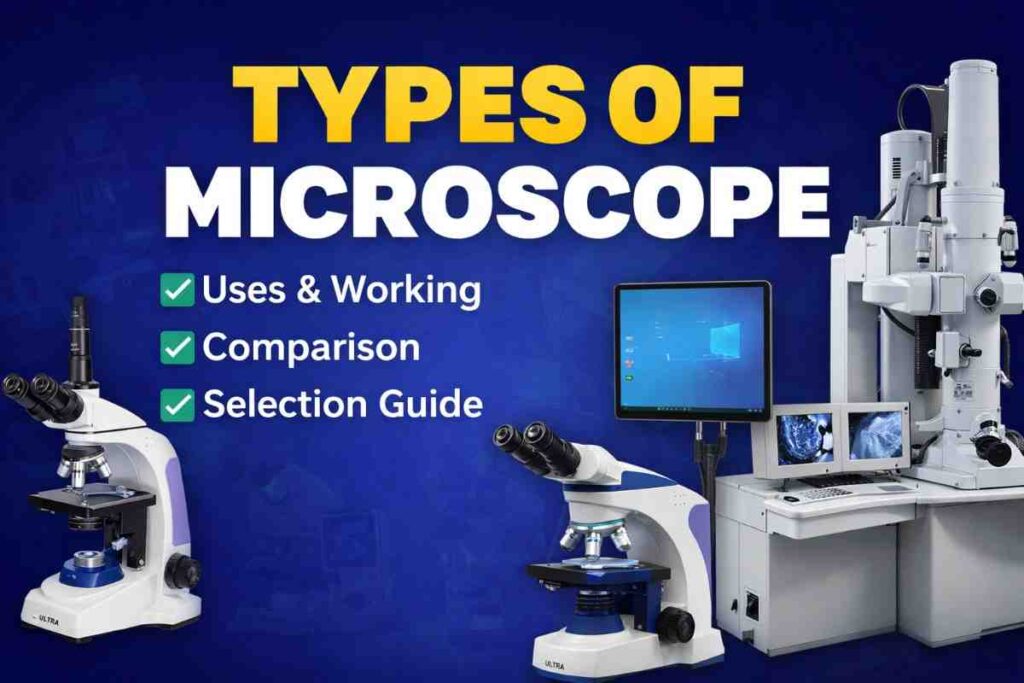
Microscopes are essential scientific instruments used to observe structures that cannot be seen with the naked eye. Over time, different types of microscope have been developed to meet the needs of education, medical diagnostics, research laboratories, and industrial applications. Understanding the types of microscope and their specific uses helps students, professionals, and laboratories select the right instrument for accurate observation and analysis.
This guide explains the major microscope types in a clear, practical way, based on real laboratory usage rather than theory alone.
Types of Microscope Based on Optical Principle
Compound Microscope
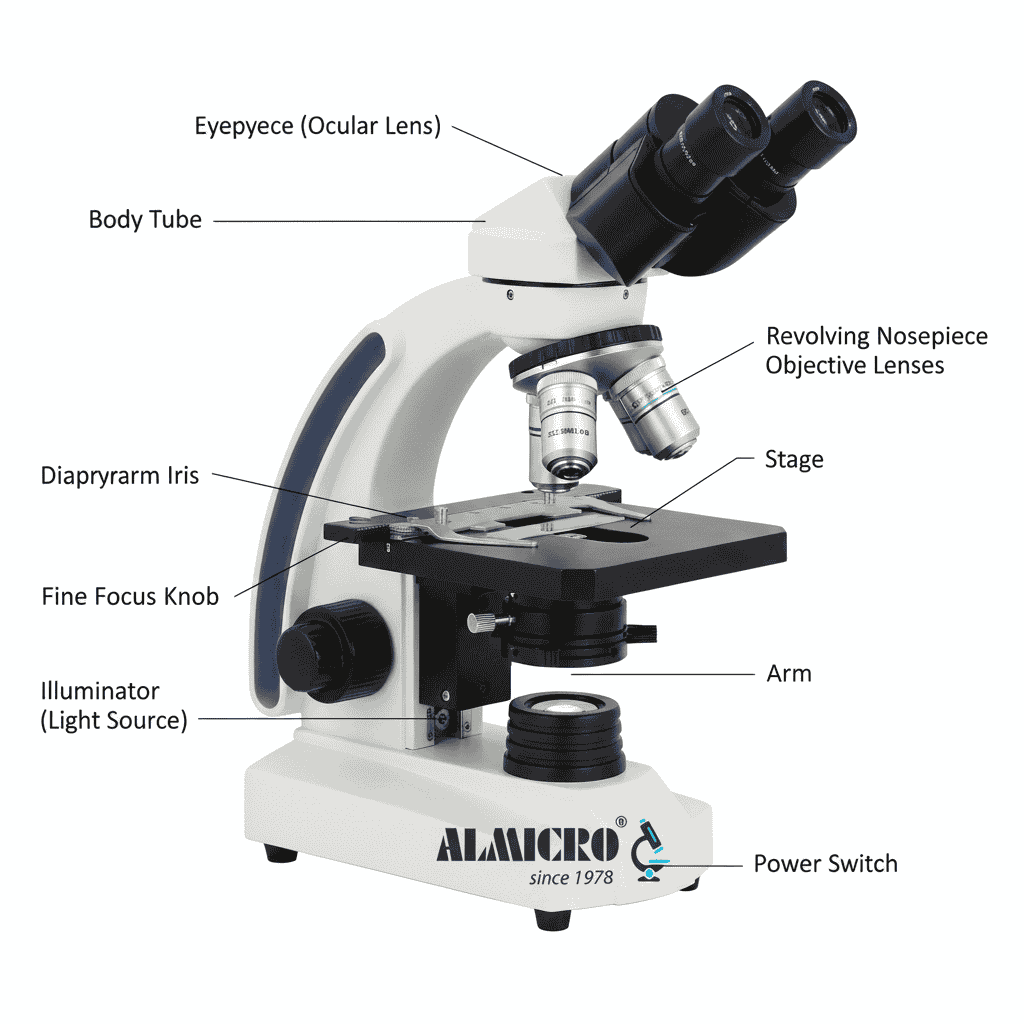
A compound microscope is the most widely used laboratory microscope in schools, colleges, and diagnostic labs. It uses multiple lenses—objective and eyepiece—to achieve higher magnification and resolution. Compound microscopes are ideal for observing cells, tissues, bacteria, and thin biological specimens using transmitted light.
Typical magnification ranges from 40× to 1000×, making it suitable for routine laboratory work and educational use.
Stereo Microscope
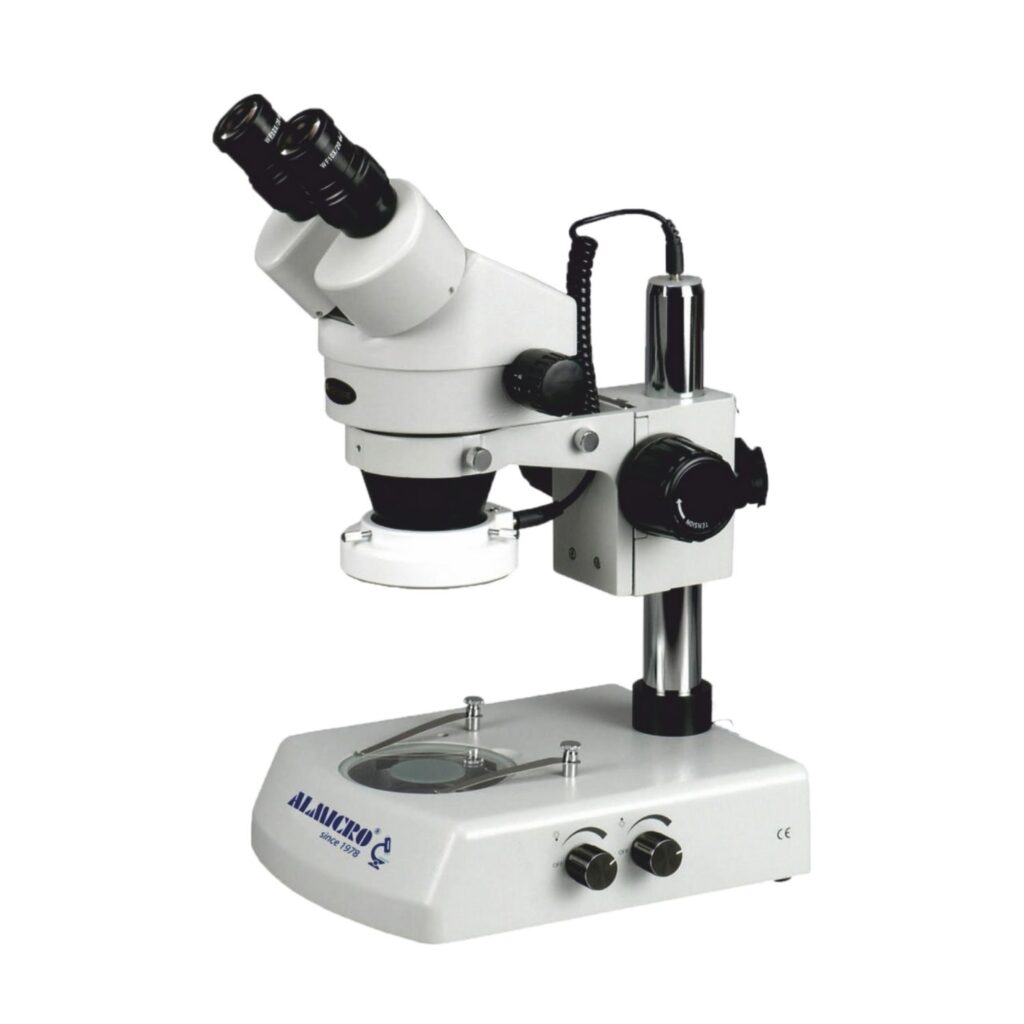
A stereo microscope, also known as a dissecting microscope, provides a three-dimensional view of specimens. Unlike compound microscopes, it uses reflected light and lower magnification. Stereo microscopes are commonly used for dissection, surface inspection, electronics work, and biological sorting.
They are preferred when depth perception and specimen manipulation are required.
Digital Microscope
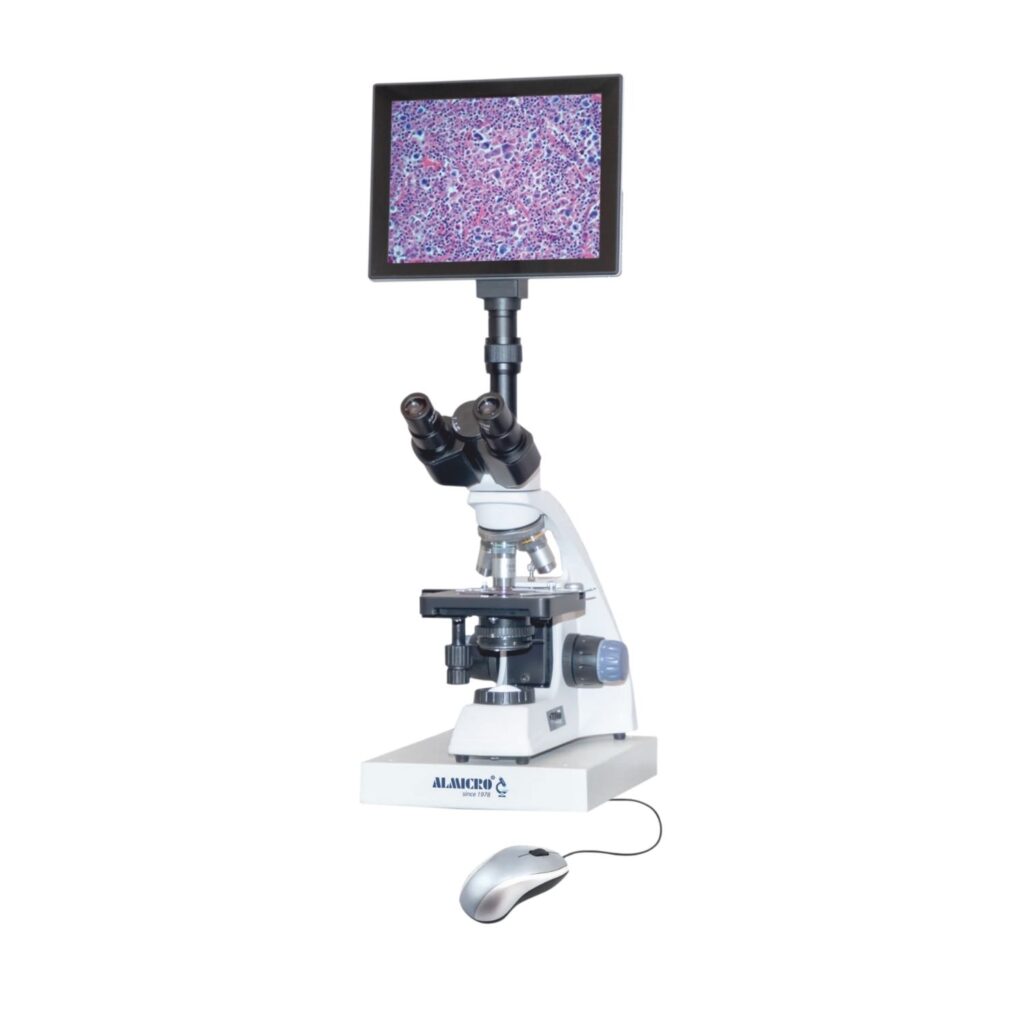
A digital microscope combines optical magnification with digital imaging technology. The image is displayed on a screen rather than viewed through eyepieces. Digital microscopes are widely used for documentation, training, quality control, and presentations.
They allow image capture, video recording, and measurement software integration, making them suitable for modern laboratories and industrial inspection.
Electron Microscope
An electron microscope uses a beam of electrons instead of light to achieve extremely high magnification and resolution. These microscopes are used in advanced research laboratories for studying viruses, nanomaterials, and atomic-level structures.
Due to their complexity and cost, electron microscopes are mainly found in research institutions and specialized facilities.
Types of Microscope Based on Application
Educational Microscopes
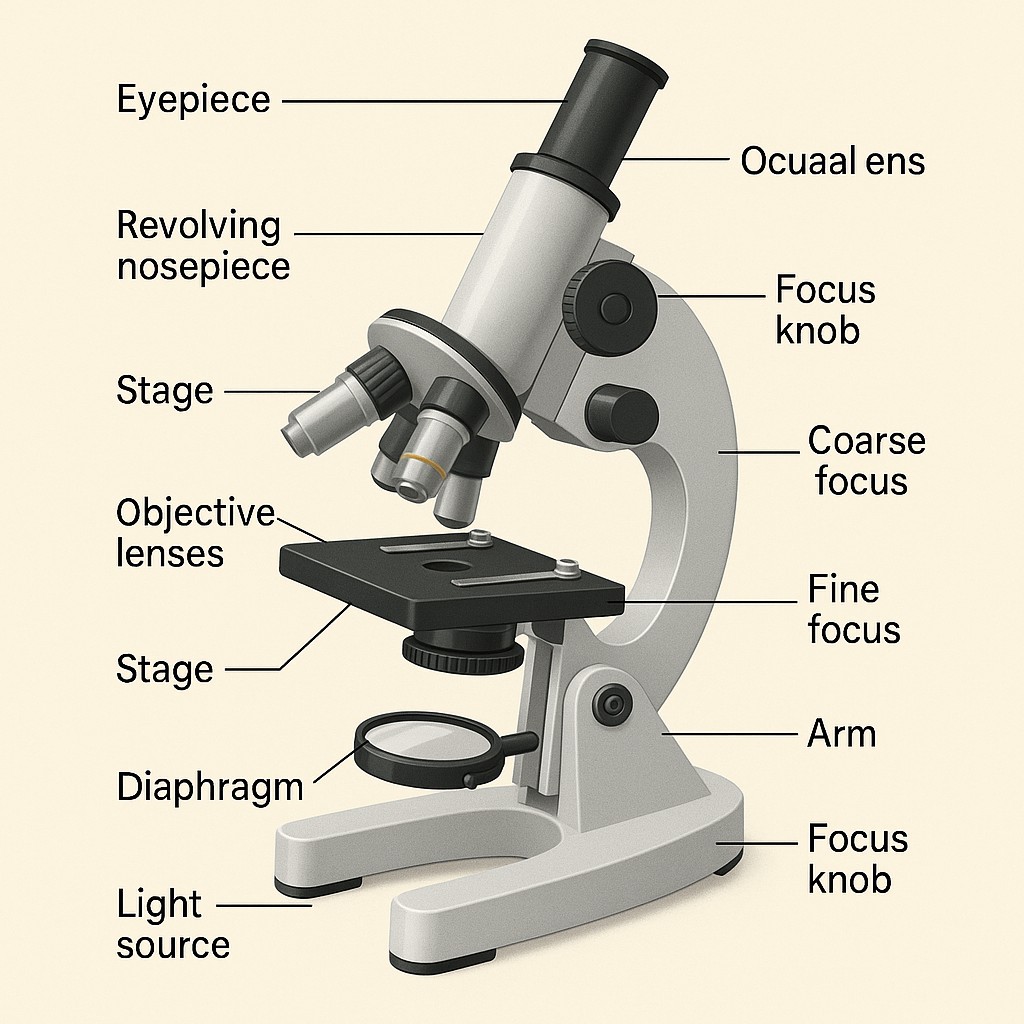
Educational microscopes are designed for schools, colleges, and training institutes. They focus on durability, ease of use, and standard magnification ranges. Compound microscopes and student stereo microscopes are most common in this category.
Medical and Pathology Microscopes
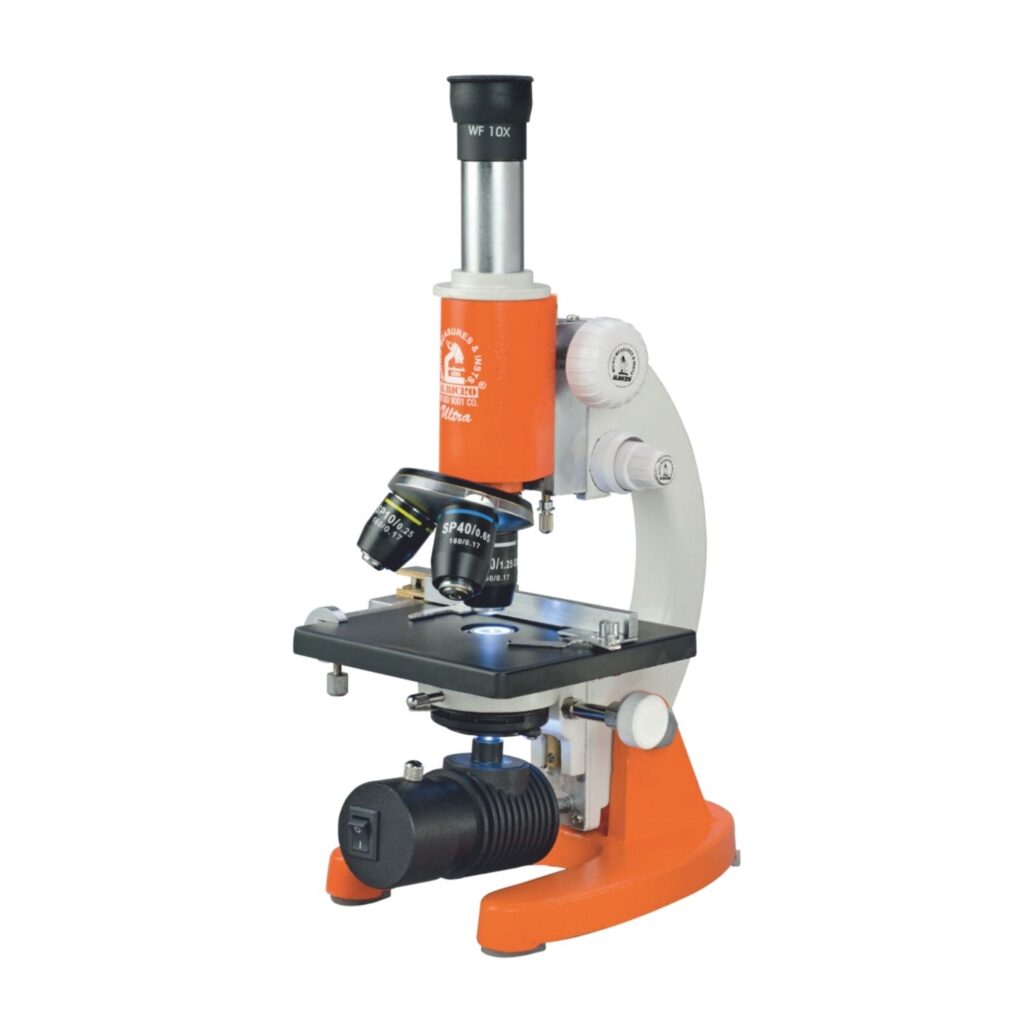
Medical microscopes are used in pathology labs, hospitals, and diagnostic centers. These microscopes offer high optical clarity, precise focusing, and compatibility with staining techniques. Trinocular compound microscopes are commonly used for documentation and reporting.
Research Microscopes
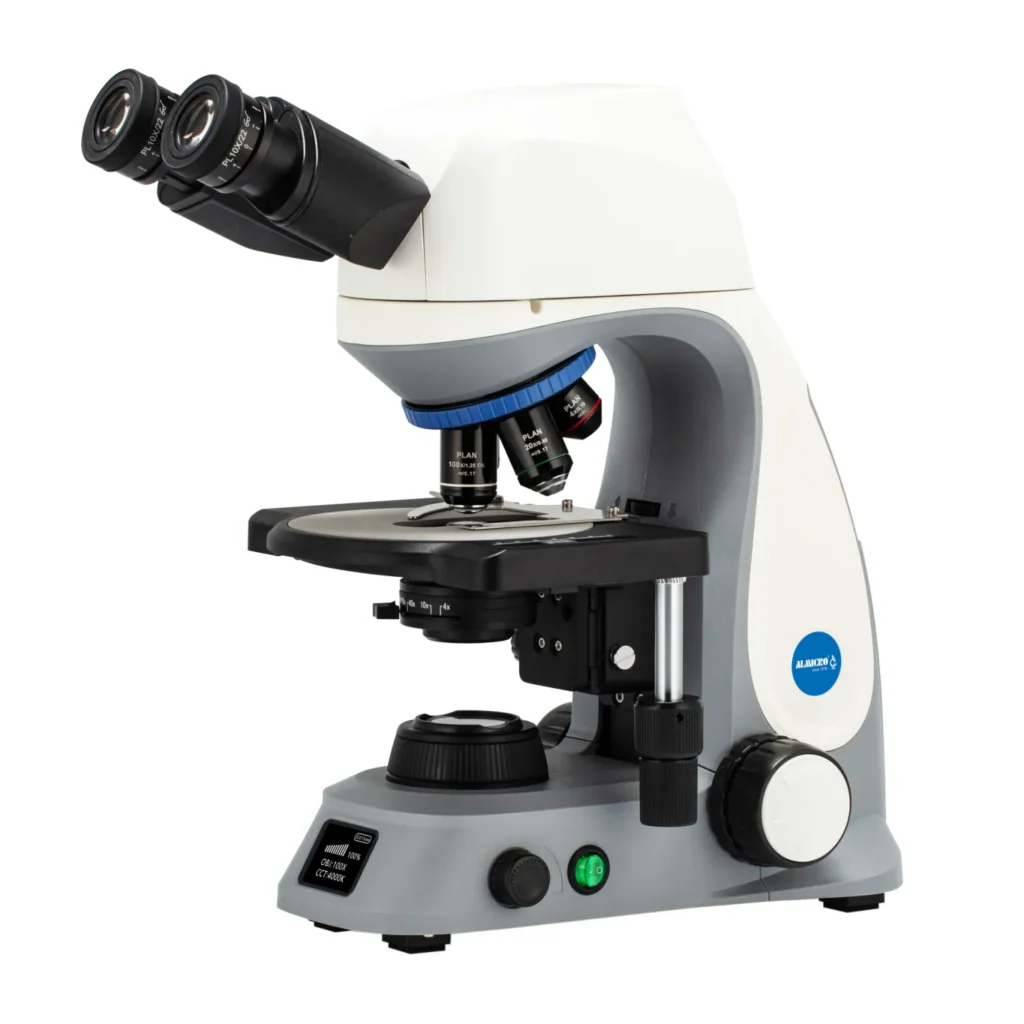
Research microscopes are built for advanced biological and material research. They support higher optical precision, modular configurations, and accessories such as phase contrast, fluorescence, or digital imaging systems.
Industrial Microscopes
Industrial microscopes are used for quality control, inspection, and failure analysis. They are commonly used in metallurgy, electronics, automotive, and manufacturing industries. These microscopes emphasize robustness and surface observation.
Comparison: Different Types of Microscope
| Feature | Compound Microscope | Stereo Microscope | Digital Microscope | Electron Microscope |
|---|---|---|---|---|
| Magnification | High (up to 1000×) | Low to medium | Medium to high | Extremely high |
| Image Type | 2D | 3D | Digital display | Electron image |
| Light Source | Transmitted | Reflected | LED + sensor | Electron beam |
| Typical Use | Cells, tissues | Dissection, surface | Documentation | Research |
How to Choose the Right Microscope
Selecting the correct microscope depends on several practical factors:
- Purpose of use (education, diagnostics, research, industry)
- Required magnification and resolution
- Type of specimen (transparent, opaque, biological, material)
- Need for documentation or digital output
- Frequency of usage and durability requirements
Understanding microscope types ensures better accuracy, efficiency, and long-term value.
Why Understanding Types of Microscope Matters
Using the wrong type of microscope can lead to poor image quality, inaccurate observations, and unnecessary costs. Proper knowledge allows users to match the microscope design with application needs, ensuring reliable results in education, healthcare, and scientific research.
Frequently Asked Questions About Types of Microscope
Q1. Which type of microscope is best for students?
Compound microscopes are most suitable for students due to ease of use and educational relevance.
Q2. What microscope is used in pathology labs?
Trinocular compound microscopes are commonly used in pathology and diagnostic laboratories.
Q3. Are digital microscopes better than optical microscopes?
Digital microscopes offer documentation advantages, while optical microscopes provide direct visual clarity.
Q4. Which microscope gives the highest magnification?
Electron microscopes provide the highest magnification and resolution.
Q5. Can one microscope be used for all applications?
No, different applications require different microscope types for accurate results.
End of Notes
There are many types of microscopes, each designed to serve a specific scientific, educational, or industrial purpose. From compound microscopes used in laboratories to advanced electron microscopes for research, understanding these differences is essential for correct selection and effective use.
Choosing the right microscope improves observation accuracy, protects equipment, and enhances learning and research outcomes.