
Description
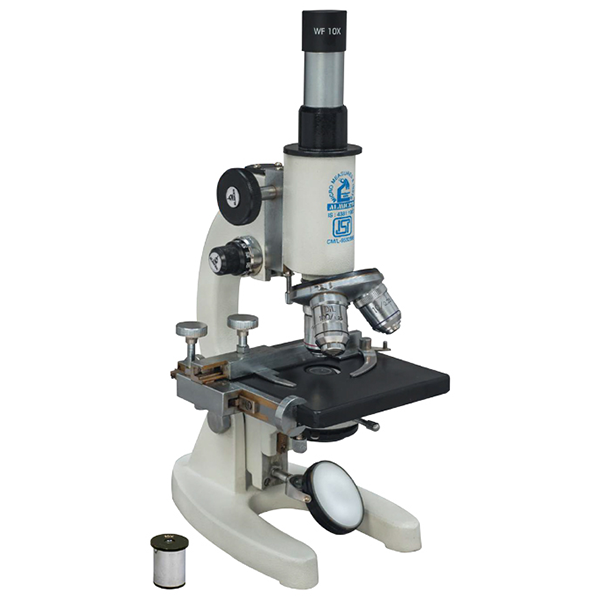
Pathological Medical Microscope BM-5: Precision Optics for Accurate Disease Diagnosis
Technical Specification Table
| Specification | Details |
|---|---|
| Observation Tube | Mechanical, 160mm with triple nosepiece |
| Focusing | Separate coarse and fine motion |
| Stage | Detachable horizontal graduated stage 120×120 mm with slide adjustment |
| Condenser | Double-lens bright-field Abbe NA 1.25, iris diaphragm, swing-out filter holder, rack-pinion movement |
| Stage Protection | Adjustable down stopper to prevent slide damage |
| Illumination | Plano-concave mirror |
A pathological medical microscope is one of the most critical instruments used in modern pathology laboratories, hospitals, and diagnostic centers. It plays a decisive role in identifying diseases at the cellular and tissue level, allowing pathologists to examine histopathological slides with extreme accuracy. From cancer diagnosis to infectious disease analysis, this microscope is the backbone of pathological investigation.
What Is a Pathological Medical Microscope?
A pathological medical microscope is a high-precision optical instrument specifically designed for examining stained tissue sections, biopsy samples, cytology smears, and body fluids. Unlike basic laboratory microscopes, it is engineered to deliver superior contrast, sharp resolution, and true color reproduction—essential for distinguishing minute cellular abnormalities.
These microscopes are widely used in:
-
Histopathology laboratories
-
Medical colleges and teaching hospitals
-
Diagnostic pathology centers
-
Research institutions
Why Pathological Microscopes Are Different from Regular Microscopes
A standard laboratory microscope may be suitable for routine observations, but pathology demands far greater optical accuracy. A pathological medical microscope is designed to meet these exacting standards.
Key differences include:
-
Higher numerical aperture objectives for better resolution
-
Advanced illumination systems for uniform brightness
-
Stable mechanical stages for prolonged slide examination
-
Enhanced optics to clearly visualize nuclei, cytoplasm, and tissue architecture
Core Components of a Pathological Medical Microscope
1. Optical System
The optical system is the heart of the microscope. It typically includes:
-
Achromatic, plan achromatic, or plan infinity objectives
-
High-quality wide-field eyepieces (WF 10x / 18–22 mm)
These optics ensure sharp imaging across the entire field of view, which is crucial for scanning large tissue sections.
2. Illumination System
Most modern pathological medical microscopes use:
-
LED illumination for long life and consistent color temperature
-
Halogen lamps for warmer light preferred by some pathologists
Uniform illumination helps prevent eye strain during long diagnostic sessions.
3. Mechanical Stage
A precision mechanical stage allows smooth and controlled movement of slides in both X and Y directions. This is essential for systematic examination of tissue sections without losing focus or alignment.
4. Focusing Mechanism
-
Coarse focusing for rapid slide positioning
-
Fine focusing for micro-level adjustments
High-grade microscopes feature coaxial focusing with minimal backlash, ensuring precise control during diagnosis.
Applications of a Pathological Medical Microscope
A Pathological Medical Microscope is indispensable in multiple diagnostic procedures:
-
Cancer Diagnosis: Identifying malignant cells, tumor margins, and abnormal tissue growth
-
Biopsy Examination: Detailed analysis of tissue samples taken from organs
-
Cytopathology: Examination of cell smears such as PAP tests
-
Hematopathology: Studying blood and bone marrow samples
-
Infectious Disease Detection: Identifying bacteria, fungi, and parasites in stained slides
Importance in Modern Pathology
Accuracy in pathology directly affects patient treatment and outcomes. A Pathological Medical Microscope enables pathologists to:
-
Detect diseases at an early stage
-
Differentiate between benign and malignant conditions
-
Confirm clinical diagnoses with visual evidence
-
Maintain consistency and reliability in diagnostic reports
Even a minor optical distortion can lead to misinterpretation, which is why high-quality pathological microscopes are non-negotiable in medical diagnostics.
Choosing the Right Pathological Medical Microscope
When selecting a microscope for pathological use, consider:
-
Optical clarity and resolution
-
Ergonomic design for long working hours
-
Compatibility with phase contrast or fluorescence attachments (if required)
-
Long-term durability and service support
A well-designed pathological medical microscope is an investment that enhances diagnostic confidence and laboratory efficiency.
Reviews
There are no reviews yet.