
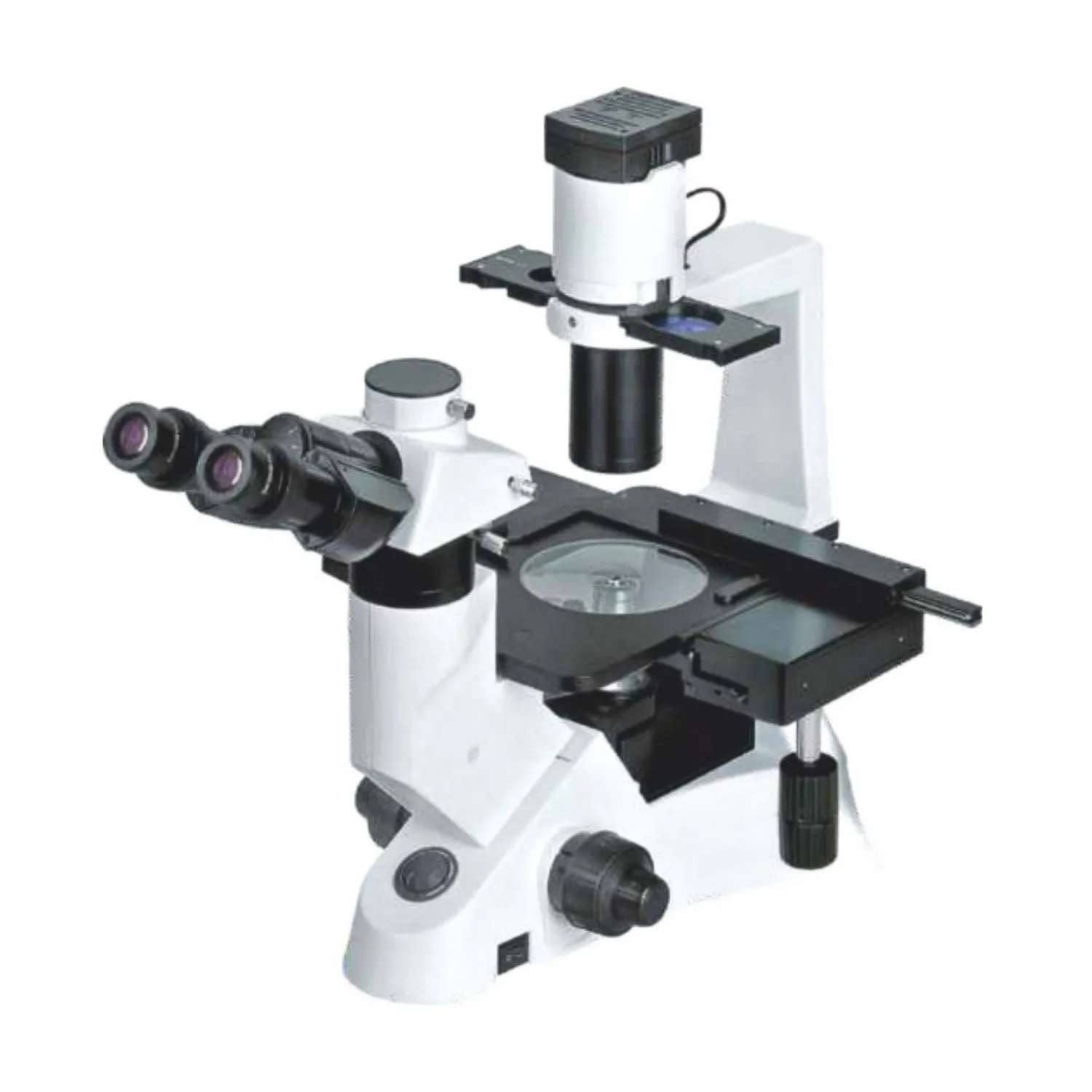
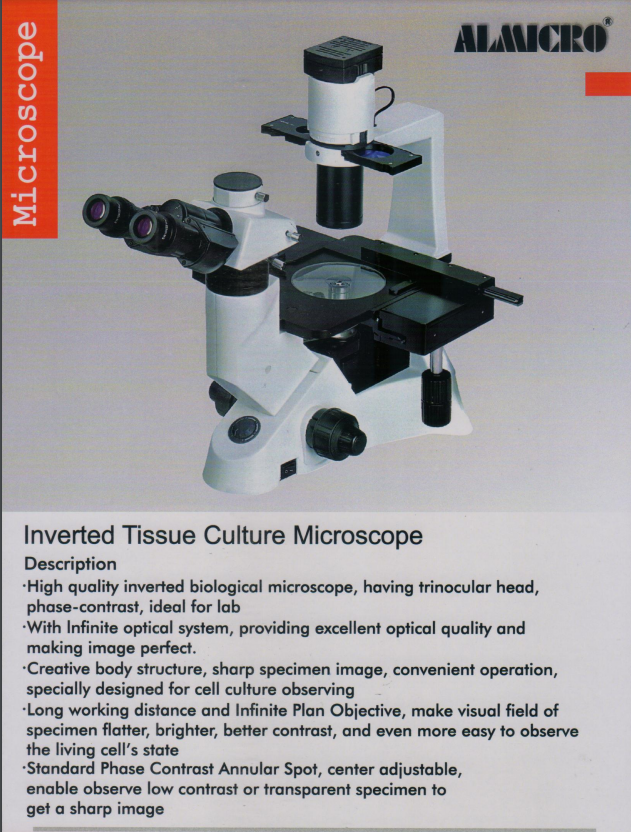
Description
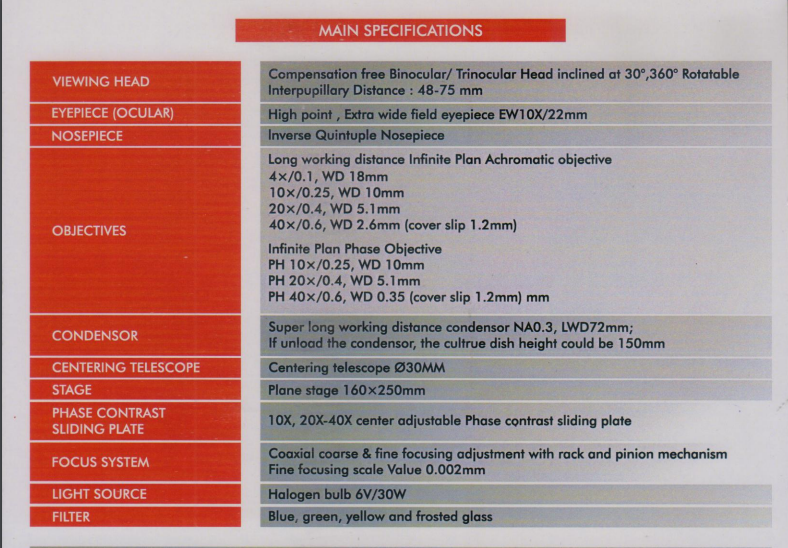
Technical Specification Table
| Specification | Details |
|---|---|
| Viewing Head | Compensation free Binocular or Trinocular Head, inclined at 30°, 360° rotatable |
| Interpupillary Distance | 48–75 mm |
| Eyepiece | Extra wide field EW10X, 22 mm |
| Nosepiece | Inverse Quintuple Nosepiece |
| Objectives | Infinite Plan Achromatic LWD objectives 4x, 10x, 20x, 40x |
| Phase Objectives | PH 10x, PH 20x, PH 40x |
| Condenser | Super long working distance condenser NA 0.3, LWD 72 mm |
| Centering Telescope | Ø30 mm |
| Stage | Plane stage 160 x 250 mm |
| Phase Contrast Plate | 10x, 20x–40x center adjustable sliding plate |
| Focus System | Coaxial coarse and fine focusing, fine scale 0.002 mm |
| Light Source | Halogen bulb 6V, 30W |
| Filters | Blue, green, yellow, frosted glass |
Key Features
• Inverted design for easy culture dish observation
• Phase contrast optics for clear live cell viewing
• Compensation free binocular or trinocular viewing head
• Extra wide field eyepieces for better field coverage
• Long working distance objectives for safe sample handling
• Quintuple nosepiece for fast objective change
• Smooth coarse and fine focusing with high accuracy
• Large plane stage for stable sample placement
• High intensity halogen illumination for clear images
• Multiple color filters for contrast control
Working Principle
The microscope places objectives below the stage. Light passes upward through the sample. Phase contrast plates convert small phase changes into visible contrast. This makes transparent cells visible without staining. The condenser directs uniform light. Objectives magnify the image. Eyepieces display a clear and detailed view. Fine focusing allows sharp adjustment during live observation.
Use Cases
• Cell culture observation in research laboratories
• Live cell analysis in biotechnology labs
• Pathology and diagnostic laboratory work
• Academic teaching and training institutes
• Pharmaceutical research and quality testing
Reviews
There are no reviews yet.