
Description
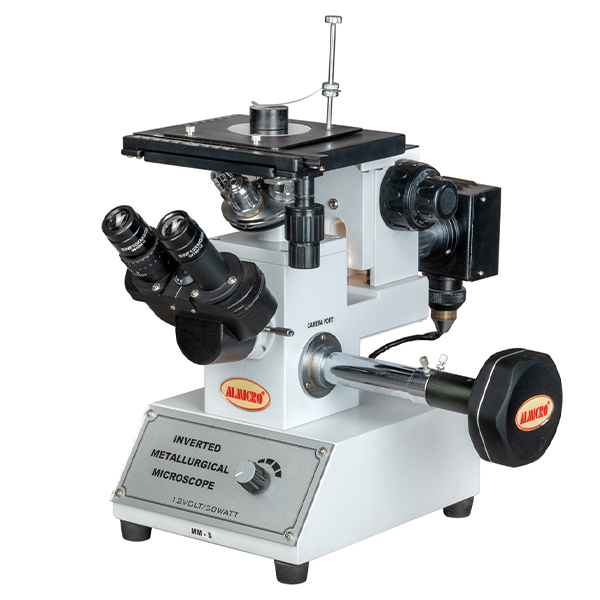
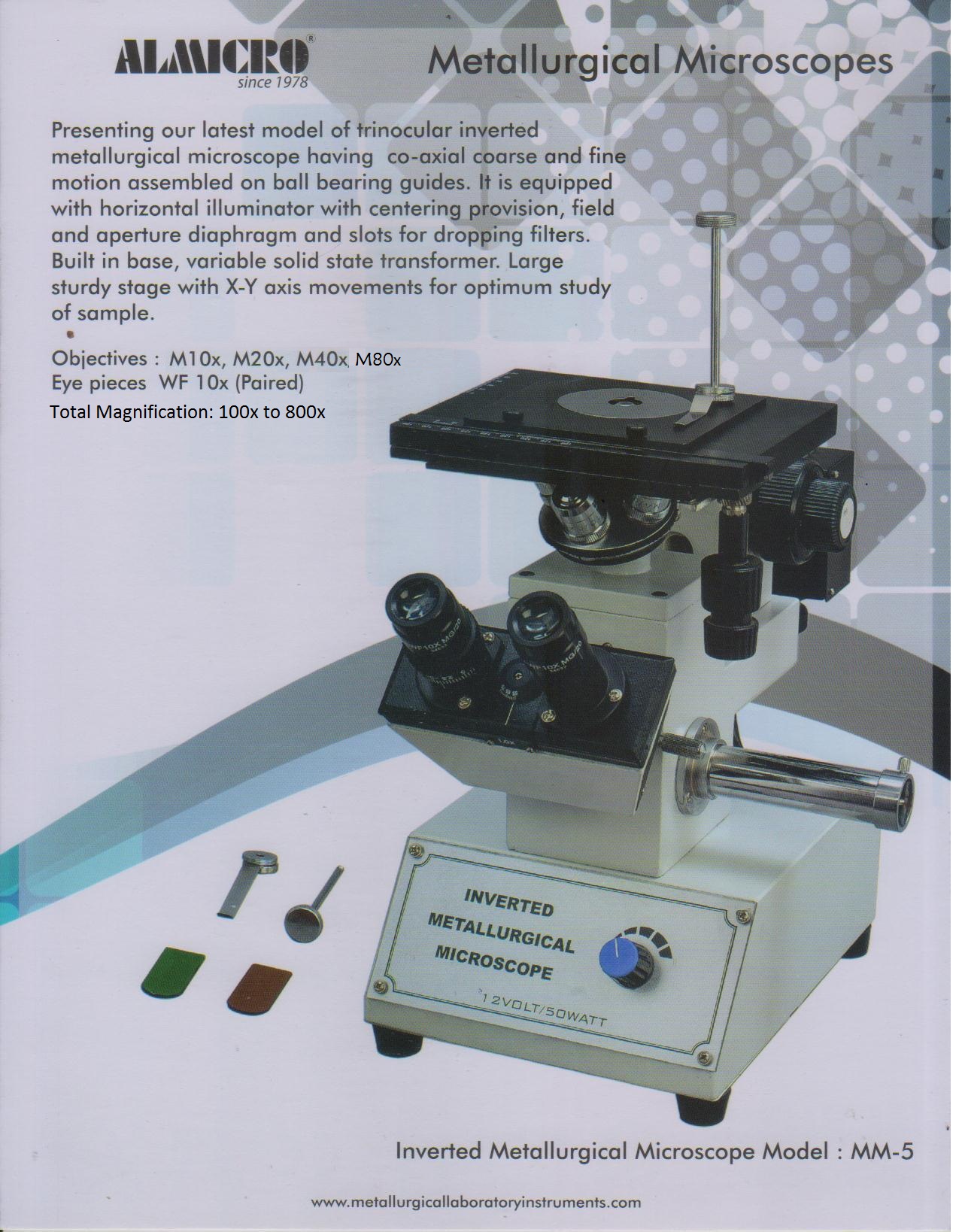
MM-5 Inverted Metallurgical Microscope
Technical Specifications
| Specification | Details |
|---|---|
| Model | MM-5 Inverted Metallurgical Microscope |
| Head Type | Compensation-free trinocular head, 45° inclined |
| Stage | Double-layer mechanical stage, 172 × 142 mm |
| Stage Movement | 30 × 30 mm precision travel |
| Focusing | Coaxial coarse and fine focusing, rack & pinion mechanism |
| Fine Focus Value | 0.002 mm |
| Illumination | 12V / 20W halogen lamp with aperture and field diaphragms |
| Polarizing Device | 360° rotating analyzer with removable polarizer |
| Design | Inverted metallurgical configuration for polished samples |
Key Highlights
-
Compensation-free trinocular head for sharp, stable imaging
-
45° inclined viewing angle for ergonomic and comfortable use
-
Double-layer mechanical stage (172 × 142 mm) for smooth slide movement
-
Stage travel of 30 × 30 mm for precise positioning
-
Coaxial coarse and fine focus with rack & pinion for accurate adjustments
-
Fine focus resolution of 0.002 mm for detailed imaging
-
Bright 12V / 20W halogen illumination with aperture and field diaphragms
-
Inverted design ideal for metallurgical samples and large specimens
-
360° rotatable polarizing analyzer for contrast enhancement
-
Removable polarizer for flexible observation methods
-
Robust build suitable for industrial and research environments
Working Principle
The MM-5 Inverted Metallurgical Microscope illuminates samples from above using a halogen lamp. Light reflects off polished metal surfaces into the objectives. Its inverted optical design allows larger or heavier samples to be observed without preparation like cutting or thinning. The objectives magnify the image, and the trinocular head provides clear visualization or camera capture. Coaxial coarse and fine focusing ensures precise height adjustments, while the polarizing attachments enhance contrast for analyzing grain structures, surface defects, and material properties.
Applications & Use Areas
-
Metallurgical laboratories for grain structure and surface defect analysis
-
Industrial quality control for inspection of metal components
-
Research centers focused on alloys, coatings, and materials development
-
Failure analysis labs examining fractures and machining marks
-
Educational institutions teaching metallography and material science
-
Production units monitoring heat treatment, metal finishing, and surface processing

Reviews
There are no reviews yet.